
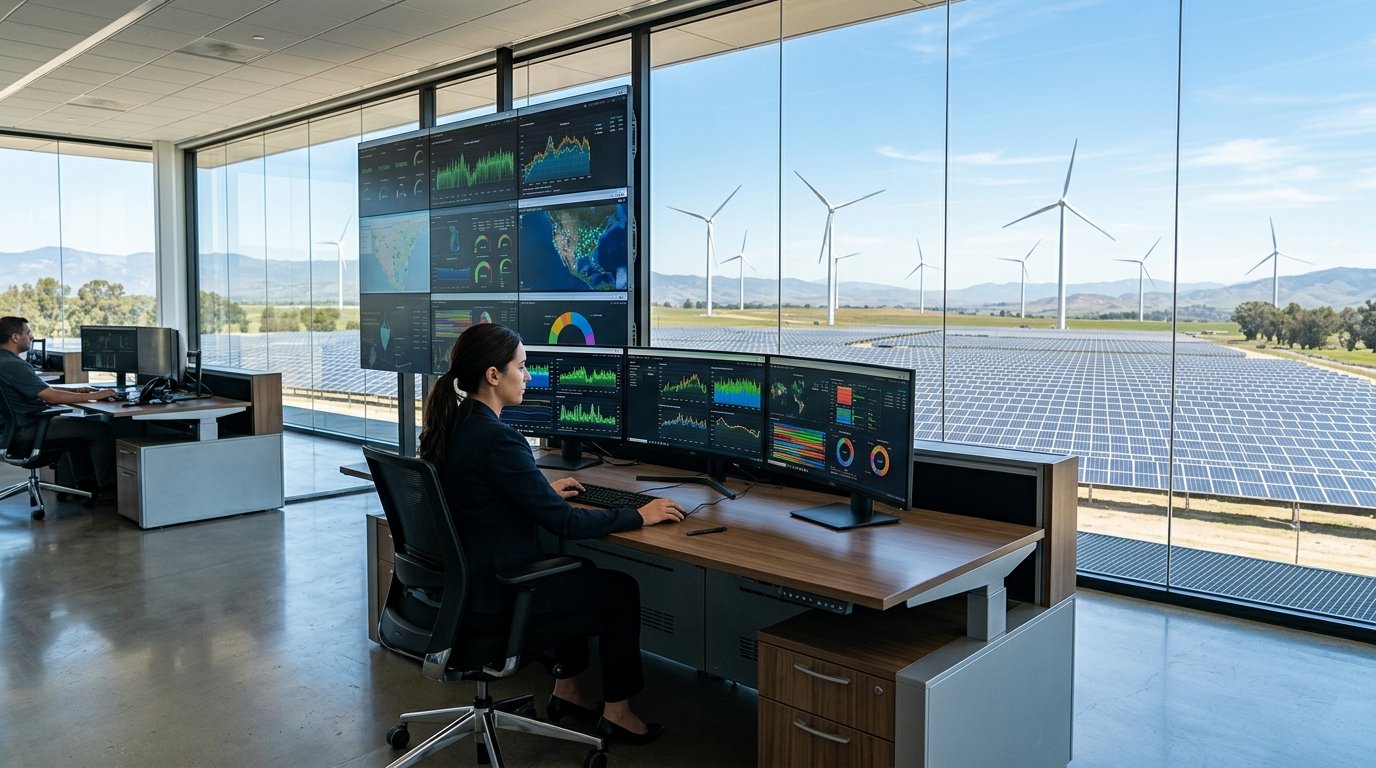
Scaling Green Operations: How Renewable Energy Asset Management Software Drives Efficiency in Solar and Wind Farms
Renewable energy asset management software is a specialized operational platform that integrates real-time performance telemetry, financial tracking, and maintenance workflows across solar and wind generation sites. By unifying data from varied equipment into a single system, these solutions help site engineers and asset owners minimize equipment downtime and increase overall energy yields. Modern operators rely on this technology to transition away from reactive troubleshooting, turning raw sensor metrics into predictable production schedules.
Managing a 50-megawatt solar farm or a multi-site onshore wind portfolio used to mean juggling separate OEM portals, custom spreadsheets, and delayed SCADA logs. If a string inverter failed on a Friday afternoon, nobody noticed until Monday morning review. That lag between failure and action directly eats into project revenue, turning brief electrical trips into thousands of dollars in lost power generation.
The Substantial Revenue Penalty of Unplanned Downtime
Equipment failures in utility-scale clean energy facilities carry immediate financial consequences. Sector reports indicate that inverter malfunctions drive approximately 35% to 40% of unscheduled maintenance events in solar installations, while mechanical gearbox issues account for nearly 25% of heavy repair budgets in wind fleets. When a 100-megawatt solar site drops offline during peak summer pricing hours, lost production costs easily exceed $30,000 per day in unrecovered power purchasing revenue.
Solar panels and wind turbines rarely break without warning. Gearboxes produce subtle acoustic anomalies weeks before a catastrophic bearing failure. Photovoltaic strings display localized heat rises days before a combiner box fails. Without centralized software continuously reading these telemetry streams, those warning signs blend into background noise. Field technicians end up spending 60% of their time running manual diagnostics on-site rather than fixing known mechanical faults.
Core Capabilities of Renewable Energy Asset Management Software
Deploying dedicated renewable energy asset management software alters how field teams interact with generation infrastructure. Instead of reacting to breaker trips, asset operations centers gain immediate visibility into performance deviations across disparate original equipment manufacturers.
Normalized Telemetry Across Mixed Equipment Fleets
Utility portfolios almost never run on equipment from a single vendor. A developer might operate Vestas and GE wind turbines alongside SMA and Sungrow solar inverters across six states. Specialized platforms ingest protocols like Modbus, OPC UA, and DNP3, translating raw data points into standardized performance indicators. This normalization lets operations engineers benchmark inverter degradation or turbine availability using identical baseline metrics across the entire portfolio.
Automated Work Order Generation and Component Tracking
Catching a fault is only half the battle. Efficient software automatically converts an alarm threshold breach into a prioritized work order ticket inside the maintenance management system. The platform assigns the job to the nearest field technician with the correct high-voltage certifications and logs required spare parts from central warehouse inventory. This direct handoff cuts average mean time to repair by up to 30%, keeping capacity factors high.
Lost warranty claims cost asset owners millions annually. When component serial numbers link directly to maintenance records within your management platform, filing OEM warranty reimbursements becomes straightforward. Technicians attach diagnostic logs and error codes to work orders, giving hardware vendors full proof of fault without tedious back-and-forth negotiations.
Predictive Maintenance Strategies That Lower OpEx
Shifting from scheduled calendar maintenance to condition-based predictive maintenance represents one of the largest operational efficiency gains available to clean energy operators. Field estimates suggest that data-driven predictive maintenance strategies reduce yearly operating expenses by 15% to 22% compared to standard reactive models.
Thermal imagery gathered by aerial drones combines with string-level monitoring data to locate micro-cracks, PID effects, and failed bypass diodes in solar arrays before localized hot spots burn through backing sheets. In wind assets, high-frequency vibration sensors attached to main bearings feed anomaly detection models that flag harmonic shifts. Technicians can then schedule pitch adjustment or bearing greasing during low-wind weather windows, avoiding expensive crane rentals during high-production months.
Contractual performance guarantees also require precise tracking. Modern software constantly evaluates actual energy production against weather-adjusted P50 and P90 baseline models. If a farm underperforms due to localized grid curtailment, cloud cover, or equipment degradation, the system pinpoints the exact cause. This precise attribution helps asset managers claim appropriate availability payments or hold operations and maintenance providers accountable to contractual SLAs.
Integrating Battery Energy Storage Systems (BESS)
As grid operators demand firmer capacity, co-located battery energy storage systems have become standard across new solar and wind installations. Managing paired storage adds operational layers, including state-of-charge balancing, thermal management, and cell degradation monitoring. Unifying storage metrics alongside generation telemetry within your primary asset platform eliminates data siloes and simplifies peak-shaving strategies.
Advanced management software tracks cell cycle counts, throughput limitations, and cooling loop efficiencies alongside solar array yields. When battery degradation models sync directly with power purchase agreement terms, asset managers maximize discharge revenue during high-tariff evening hours without invalidating manufacturer warranty thresholds.
Standardizing Financial Performance and ESG Compliance
Asset management extends beyond physical hardware maintenance. Capital providers, debt holders, and institutional investors demand rigorous monthly financial reporting and environmental compliance data. Tracking tax credits, REC distributions, and debt service coverage ratios across dozens of special purpose vehicles quickly overwhelms manual accounting teams.
Purpose-built platforms integrate directly with enterprise ERPs, pulling clean production numbers into financial models. Asset owners automate complex debt service schedules and power purchase agreement billings with verifiable, tamper-proof generation logs. As regulatory scrutiny around sustainability metrics increases, centralized data repositories streamline mandatory ESG disclosures, providing auditors with clean trails from megawatt-hour generation to carbon offset retirement.
Key Factors When Selecting an Asset Software Platform
Clean energy infrastructure portfolios evolve rapidly through acquisitions and re-powering initiatives. When choosing renewable energy asset management software, technical leaders must prioritize flexible architecture and operational independence over rigid proprietary tools tied to a single hardware manufacturer.
Open API access forms the cornerstone of any long-term software deployment. Your operational data belongs to your organization, and your management stack needs to share data freely with financial ledgers, GIS mapping platforms, and specialized analytics tools. Edge computing capability is equally critical. Remote wind projects in mountain passes or desert solar sites frequently experience cellular dropouts. Software with localized edge buffering stores sensor logs on-site during outages and synchronizes automatically back to the cloud once connectivity restores.
Selecting renewable energy asset management software that grows with your technology stack protects your capital investment. Whether adding green hydrogen electrolyzers or offshore wind sites down the line, a flexible cloud platform keeps operational overhead manageable as megawatt capacity scales up.
Frequently Asked Questions
What is renewable energy asset management software?
It is a specialized operational platform that aggregates real-time telemetry, maintenance records, and financial data from solar, wind, and storage assets into a unified platform. The software normalizes data across varied OEM equipment to help operators track performance, automate work orders, and protect capital assets.
How does predictive maintenance reduce downtime in solar and wind assets?
Predictive maintenance uses continuous sensor monitoring and machine learning to detect equipment anomalies before failures occur. By identifying early indicators like gearbox vibration shifts or inverter thermal spikes, repair crews can fix issues during scheduled windows, avoiding costly emergency outages.
Can asset management software integrate with mixed OEM hardware?
Yes, modern platforms connect with equipment from diverse manufacturers through standardized protocols like Modbus, OPC UA, and custom APIs. This vendor-agnostic design allows fleet operators to centralize telemetry from different inverter and turbine brands on a single dashboard.
How does asset software support hybrid solar and battery storage sites?
The software monitors combined generation and discharge curves, balancing state-of-charge metrics alongside solar irradiance data. It optimizes battery degradation models and ensures co-located assets meet grid interconnect agreements and power purchase terms.
What return on investment can asset owners expect from these platforms?
Industry benchmarks indicate that digital asset management platforms yield a 15% to 25% reduction in yearly operating costs while increasing overall portfolio energy production by 2% to 5%. These efficiency gains typically allow software investments to pay for themselves within 12 to 18 months of deployment.