
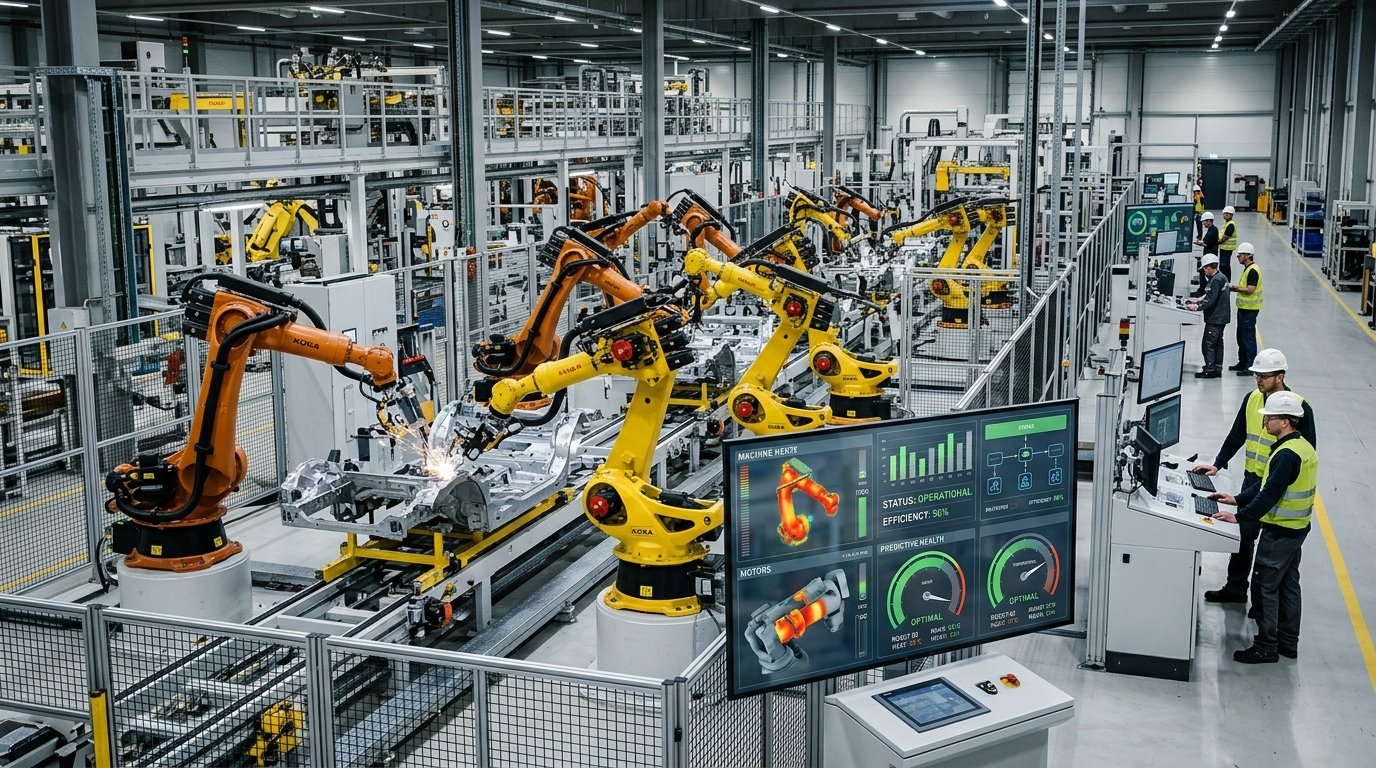
Asset performance management software is a centralized digital system that aggregates operational telemetry from shop-floor machinery to monitor physical asset health, predict mechanical failures, and optimize maintenance intervals. By shifting operations from calendar-based routines to real-time risk assessments, manufacturing facilities turn unpredictable equipment breakdowns into manageable, scheduled maintenance events. Industry studies suggest that plants shifting to this data-led model lower overall maintenance spending by 20 to 30 percent while improving overall equipment effectiveness by double digits.
Walk onto any factory floor at 2 AM, and you can instantly spot the difference between a reactive plant and a proactive one. In a reactive plant, red warning lights flash above an idle stamping press while three technicians scramble to source a replacement hydraulic valve that should have been ordered weeks ago. In a proactive facility, that same press operates smoothly through the night shift because a subtle thermal spike was flagged three weeks prior, allowing engineers to swap the wearing component during a routinely scheduled shift change.
Every plant director knows that unscheduled stoppages kill profit margins. Yet, many organizations still fall into the trap of treating maintenance as an inevitable tax on production. When a critical drive motor fails unexpectedly, the cost goes far beyond the price of a replacement rotor or two hours of wrench time. You pay for scrap material sitting frozen in heating ovens, delayed customer shipments, expedite fees for air-freighted components, and crew overtime. Estimates show that unscheduled downtime costs heavy manufacturers roughly 50 billion dollars annually, with equipment failure responsible for nearly 42 percent of those unplanned outages.
The Limits of Calendar-Based Maintenance
For decades, preventative maintenance meant pulling out a binder or setting calendar reminders every 90 days to swap oil, replace belts, and grease bearings. While this approach is better than running equipment to complete destruction, it operates on a major flaw: static schedules assume predictable wear rates.
In reality, machine wear is rarely linear. Operating conditions fluctuate constantly. A pump running at 90 percent load in an unconditioned summer warehouse wears out far faster than an identical pump operating at half capacity in a cool, climate-controlled space. Servicing equipment on a rigid calendar timeline means you often replace parts that still have months of useful life remaining, or worse, miss early warning signs on a component failing ahead of schedule.
Core Capabilities of Modern Asset Performance Management Software
To bridge the gap between physical machine behavior and operational decision-making, plant leaders rely on specialized platforms that process high-frequency telemetry. Here is how modern asset performance management software changes daily shop-floor reality:
1. Continuous Telemetry Ingestion and Anomaly Detection
Instead of waiting for a manual monthly vibration check, digital systems stream temperature, acoustic emissions, pressure, and current draw directly from IoT edge devices. The platform establishes a baseline of normal operation for each machine, accounting for variable production speeds and product runs. When a bearing develops micro-pitting, it creates subtle high-frequency vibration signatures long before a human technician can hear or feel them. The system catches these micro-anomalies immediately.
2. Failure Mode and Effects Analysis Automation
Raw data without operational context is just noise. High-performing asset performance management software correlates real-time sensor anomalies against historical failure modes. When a compressor shows rising differential pressure alongside an elevated bearing temperature, the system does not just sound a generic alarm. It identifies the root issue as potential lubrication breakdown and calculates the estimated remaining useful life based on current operational intensity.
3. Closed-Loop CMMS Integration
Predictive insights lose value if they sit isolated in a dashboard that nobody checks. Effective platforms integrate directly with Computerized Maintenance Management Systems and Enterprise Resource Planning tools. When risk thresholds are crossed, the platform generates a work order automatically, attaches diagnostic charts, checks inventory for required spare parts, and assigns the task to the right specialist during an upcoming maintenance window.
Quantifying the Savings: Where Cost Reductions Actually Come From
Shifting to a predictive framework directly affects financial performance across several line items. When evaluating asset performance management software deployments, financial officers typically see return on investment driven by three main areas:
First, spare parts inventory holding costs decrease dramatically. When maintenance teams know weeks in advance which components will fail, they no longer need to keep hundreds of thousands of dollars in emergency buffer stock sitting on warehouse shelves. Parts can be ordered just in time for scheduled interventions.
Second, direct maintenance labor efficiency improves. Technicians spend less time running around conducting manual inspections on healthy machines and more time executing targeted, high-value repairs. Industry benchmarks show that maintenance labor efficiency increases by 15 to 25 percent following a full predictive rollout.
Third, product yield and quality stabilize. Mechanical degradation rarely happens in isolation. A worn spindle on a CNC mill introduces micro-chatter, which degrades surface finishes and causes out-of-spec parts long before the machine suffers total mechanical seizure. Catching mechanical drift early protects yield metrics.
Overcoming Common Implementation Stumbling Blocks
Deploying asset performance management software is not simply an IT installation, it requires an operational mindset shift. Plants that succeed usually follow three practical principles:
Focus on critical assets first. Do not attempt to instrument every conveyor belt and small pump on day one. Map your plant floor and start with the bottlenecks, the single points of failure where a three-hour shutdown halts the entire facility. Demonstrating quick financial returns on two or three critical assets builds organizational momentum.
Respect the expertise of seasoned technicians. Field personnel are often skeptical of automated alerts, especially if early system tuning generates false positives. Involve lead technicians early in the threshold-setting process. Combine their intuitive knowledge of machine behavior with software analytics to refine detection models.
Clean up legacy data structures. Telemetry needs accurate asset hierarchies to deliver actionable insights. If your existing maintenance records catalog components under conflicting naming conventions, spend time harmonizing your asset tags before connecting predictive tools.
Building a Resilient Maintenance Culture
The ultimate goal of predictive maintenance is not to eliminate human oversight, but to give maintenance teams control over their calendar. When maintenance shifts from continuous firefights to planned precision work, shop-floor safety improves, technician burnout drops, and plant capacity increases without buying new heavy machinery. Choosing the right asset performance management software gives manufacturing operations the clarity needed to turn historical machine data into long-term profitability.
Frequently Asked Questions
What is the primary difference between preventative maintenance and predictive maintenance?
Preventative maintenance relies on fixed schedules or operating hours to service equipment regardless of its actual condition. Predictive maintenance uses real-time sensor data and analytics to monitor asset health and trigger servicing only when early signs of wear appear.
How does asset performance management software gather machine data?
The software ingests data directly from machinery through connected IoT sensors, PLCs, and SCADA systems. It continuously tracks parameters like vibration, thermal output, pressure, and electrical current to evaluate physical asset conditions.
Can asset performance management software integrate with legacy manufacturing equipment?
Yes, legacy machines can be retrofitted with external wireless IoT sensors without tapping into older internal control panels. The software processes sensor feeds from these external devices to bring older machinery into modern predictive maintenance workflows.
What is the typical ROI timeframe for an asset performance management software rollout?
Most manufacturing facilities achieve positive return on investment within 6 to 12 months of deployment. Savings are driven by avoiding catastrophic downtime events, reducing rush freight for spare parts, and streamlining labor schedules.
How does predictive maintenance help lower inventory carrying costs?
By forecasting component failures weeks ahead of time, procurement teams can order spare parts as needed rather than hoarding expensive safety stock. This just-in-time spare parts management directly reduces warehouse holding costs and working capital requirements.