
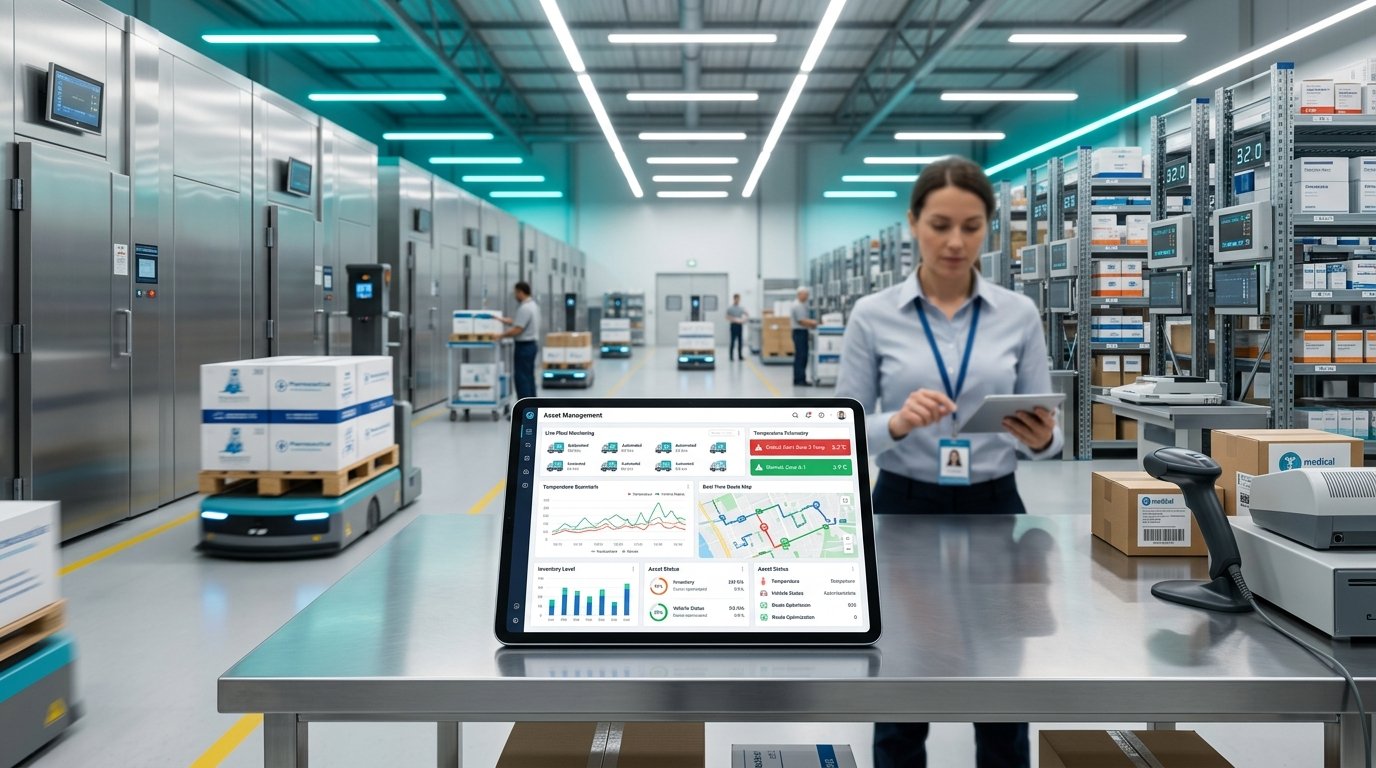
An IoT-integrated asset management system for pharmaceutical cold chains continuously monitors temperature-sensitive drugs during transit and storage, converting environmental telemetry into verifiable compliance audit trails. By pairing real-time sensor data with central inventory logs, these platforms prevent thermal excursions and maintain strict adherence to FDA 21 CFR Part 11 and EU GDP guidelines. Industry estimates suggest that cold chain disruptions cause roughly $35 billion in lost pharmaceutical value every year, making continuous digital oversight a necessity rather than a luxury.
If you manage life sciences logistics, you already know that a single broken seal or failed refrigeration unit can destroy millions of dollars in inventory. Worse, it creates a massive regulatory headache that can stall distribution for months. Moving biologic products, vaccines, and specialized therapies requires zero deviation from strict thermal limits. Yet many logistics teams still rely on outdated USB data loggers, retrospective spreadsheets, and fragmented communication channels to manage their highest-value shipments.
Transitioning to specialized asset tracking software changes how teams respond to environmental anomalies. Instead of discovering spoiled cargo at a receiving dock hours after the damage occurs, logistics directors can track live environmental conditions across every step of the transit route.
The Financial Reality of Temperature Failures in Logistics
Managing pharmaceutical freight leaves almost no room for guesswork. Cold chain failure rates remain surprisingly high across global trade lanes, with industry studies suggesting that up to 20 percent of temperature-sensitive healthcare products suffer damage during ocean or air transit. When a thermal excursion happens, the immediate loss includes not just the raw product value, but also custom packaging, expedited freight charges, and weeks of delayed clinical trials or patient care.
Regulatory agencies like the FDA and the European Medicines Agency do not accept gaps in environmental history. If you cannot prove that a pallet stayed between 2 and 8 degrees Celsius throughout its four-day journey, regulators expect you to destroy that shipment.
Standard tracking setups fail because they operate retroactively. USB loggers record temperature fine, but they keep that data locked inside a sealed box until a receiver plugs the device into a desktop computer. By then, the shipment has already spent hours sitting on a hot tarmac, rendering the entire lot unusable.
How an Asset Management System Prevents Cold Chain Spoilage
Modern cold chain monitoring relies on continuous telemetry. By integrating thermal, humidity, and shock sensors directly into your asset management system, logistics operators turn passive containers into active data nodes. These battery-powered sensors broadcast environmental metrics over cellular and satellite networks, feeding a central dashboard every few minutes.
When an asset management system ingests continuous sensor feeds, it shifts operational strategy from damage control to active prevention. If a trailer’s primary cooling unit drops output while idling at a border crossing, the system flags the drop long before the interior container temperature crosses a critical threshold.
Automated notifications go straight to duty managers, giving them time to contact the driver, adjust secondary cooling units, or redirect the truck to a nearby cold storage facility. Catching a three-degree shift early saves the payload, preserves the delivery timeline, and avoids a costly quarantine process.
Building Immutable Audit Trails for GxP Compliance
Surprise audits make quality management teams anxious for a reason. Retrieving paper records, matching serial numbers to temperature logs, and verifying chain-of-custody handoffs across multiple 3PL vendors takes days of tedious manual work.
A specialized pharma asset management system automates this entire documentation cycle. Every temperature reading, door-open event, and location pin attaches directly to the specific batch or lot number in a secure, time-stamped digital ledger.
When auditors request proof of compliance under 21 CFR Part 11 or Good Distribution Practice regulations, your team can export complete, tamper-proof history reports in seconds. You get clear, verifiable proof that environmental standards were maintained across every leg of transport, removing the stress from regulatory inspections.
Essential Features for High-Stakes Cargo Oversight
Not all tracking tools fit the rigorous demands of pharmaceutical logistics. Generic fleet platforms track vehicle GPS, but they lack the granular, sensor-level visibility required for cold chain assurance.
When evaluating an asset management system for medical supplies, focus on capabilities designed specifically for life sciences compliance:
- Validated Sensor Integration: Ensure software supports multi-sensor tags capable of measuring ambient temperature, internal payload probe readings, relative humidity, light exposure, and sudden impact.
- Dynamic Excursion Rule Engines: Look for platforms that allow you to set custom temperature profiles based on specific drug stability profiles, including multi-stage alerts for warning states versus critical breach states.
- System Interoperability: Choose software that connects to existing warehouse management software and enterprise resource planning platforms via open APIs.
- Geofenced Transit Alerts: Set automated alerts when shipments enter high-risk transit hubs, experience unexpected delays, or deviate from pre-approved shipping corridors.
- Configurable Quality Sign-Offs: Implement digital signature workflows that require dual sign-offs from quality control and logistics directors before releasing quarantined shipments.
Operational Playbook: Deploying Software across Supply Networks
Rolling out new monitoring technology across multi-carrier networks requires systematic execution. Following a structured roadmap keeps your deployment on schedule while ensuring complete regulatory alignment.
Step 1: Conduct a Thermal Risk Assessment
Evaluate your existing distribution lanes to identify vulnerable touchpoints. Look closely at cross-docking facilities, customs processing hubs, and tarmac transfers where temperature spikes happen most frequently. Use this baseline data to define where IoT hardware and software monitoring will deliver the highest return.
Step 2: Connect IoT Hardware to Your Central Platform
Deploy calibrated, single-use or reusable sensor tags across your shipping containers. Pair these devices directly with your central software platform so each device automatically maps to specific product batches, transport containers, and shipping manifests.
Step 3: Define Threshold Protocols and Alert Workflows
Set precise environmental ranges based on the specific stability requirements of your pharmaceutical inventory. Configure automated alerts so warning notifications reach dispatchers while critical excursion alerts route directly to quality managers who hold decision-making authority over shipment holds.
Step 4: Train Quality and Field Operations Teams
Train your logistics coordinators, warehouse staff, and third-party freight partners on standard operating procedures. Make sure every team member understands how to review active telemetry, clear minor warning alerts, and pull instant audit reports during compliance checks.
Transforming Compliance into a Competitive Advantage
Cold chain management in the pharmaceutical sector is no longer just about buying refrigerated trucks or thick insulated boxes. It is about total environmental control and real-time visibility. When you build your logistics operations around an enterprise asset management system, you eliminate the blind spots that lead to product loss, regulatory fines, and damaged brand reputation.
Investing in live tracking infrastructure turns compliance from a slow, expensive burden into a smooth operational routine. You protect valuable medical products, pass regulatory audits with complete confidence, and deliver life-saving treatments to market without delay.
Frequently Asked Questions
How does an asset management system handle temperature excursions in real time?
An asset management system connects directly to IoT sensors attached to cold chain containers, continuously transmitting temperature and location metrics over cellular networks. When readings cross established thresholds, the system immediately triggers automated alerts to dispatchers and quality managers. This rapid notification allows logistics operators to intervene or re-route shipments before product integrity breaks down.
What regulations govern pharmaceutical cold chain asset tracking?
Cold chain operations must comply with strict international standards, including FDA 21 CFR Part 11 in the United States and Good Distribution Practice guidelines in Europe. These frameworks require verifiable electronic records, calibrated sensor tracking, and unalterable audit trails for all climate-controlled pharmaceuticals. Software solutions help log every environmental change to satisfy these regulatory checks.
Can an asset management system integrate with existing ERP and WMS platforms?
Yes, enterprise asset software uses REST APIs and webhooks to pass telemetry and location data directly into existing enterprise resource planning and warehouse management applications. This connection ensures inventory levels, lot numbers, and temperature logs update automatically across your entire tech stack. As a result, quality assurance and operations teams work from the exact same dataset.
What is the difference between passive data loggers and real-time IoT tracking software?
Passive loggers store temperature data locally on a USB or memory chip, requiring manual extraction and analysis after a shipment arrives at its destination. Real-time IoT tracking software streams continuous environmental telemetry over cellular or satellite networks throughout the entire journey. This live feed gives logistics managers immediate visibility into active shipments rather than discovering damaged goods after delivery.
How long does it take to implement a cold chain asset management system?
Most specialized cold chain implementations take anywhere from six to twelve weeks, depending on fleet size and system integration complexity. The process involves calibrating hardware sensors, configuring platform rules, and validating workflows for regulatory compliance. Once operational, teams can onboard third-party logistics partners within days using standardized templates.