
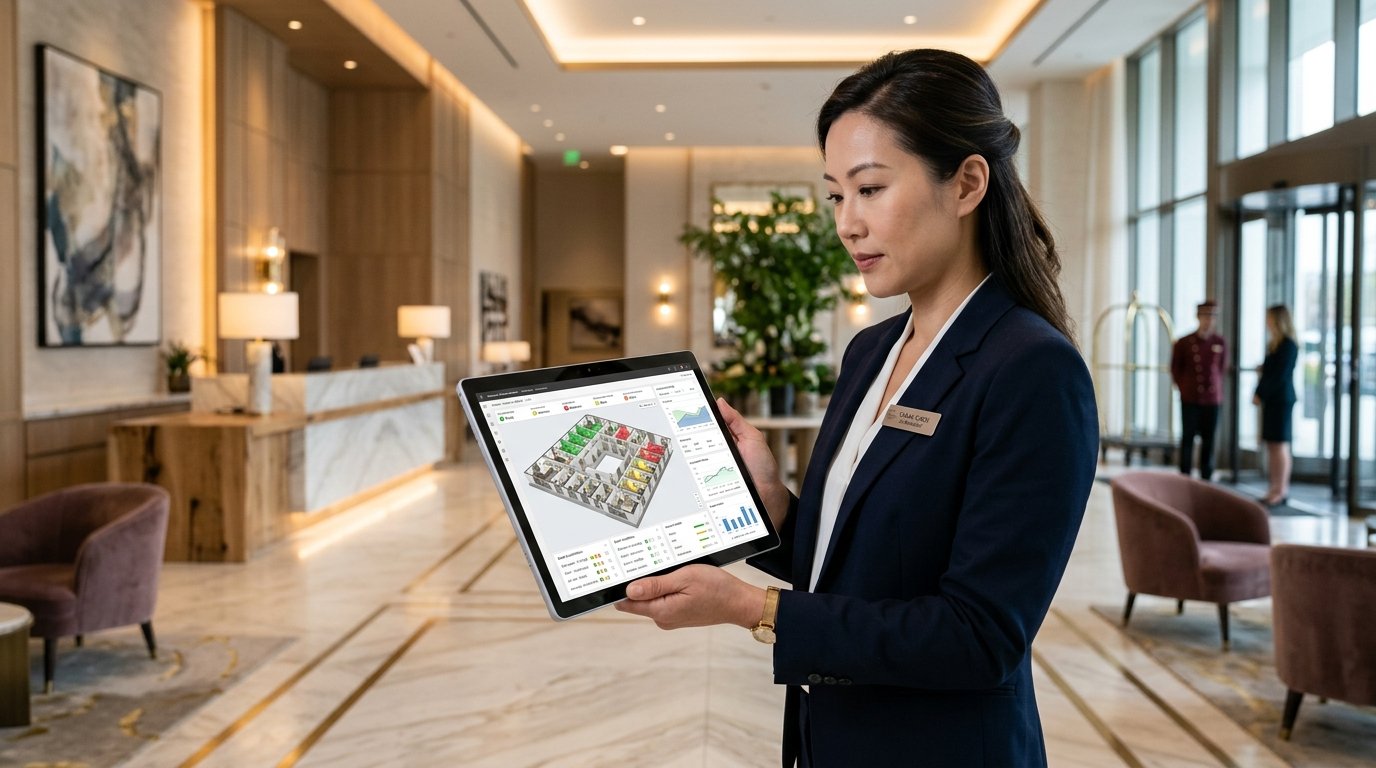
Luxury hotel operations rely on high-value physical assets to justify premium night rates and preserve brand equity. Digital asset management software gives property managers direct control over furniture, fixtures, and equipment across complex multi-property portfolios. By moving from reactive repairs to predictive asset maintenance, luxury hoteliers cut unexpected capital expenditure by an estimated 15 to 22 percent while preventing out-of-order room delays.
The High Cost of Unchecked FF&E Decay
When a guest pays twelve hundred dollars a night for a suite, a chipped Italian marble table or a squeaky bespoke chaise isn’t just a minor issue. It damages the brand’s reputation and often results in costly room credits. Luxury properties routinely lose revenue because engineering teams lack visibility into asset conditions before a guest complains.
Industry estimates suggest that unrecorded furniture deterioration accounts for nearly 12 percent of premature asset retirements in five-star hotels. Engineering personnel spend hours searching storage bays for matching replacement light fixtures or custom hardware. Meanwhile, high-revenue suites sit out of inventory for days while staff scramble to source replacements. This reactive loop drains operating margins and puts extra pressure on housekeeping teams during tight turnover windows.
Why Traditional Maintenance Logs Fail Luxury Property Operations
For decades, hotels relied on paper logs, static spreadsheets, or basic work order tickets. These tools track that a task was completed, but they fail to track the life story of the item itself. A spreadsheet might tell you that Room 402 received a deep carpet clean last March. It won’t tell you that the imported velvet sofa in that same room has been repaired four times in eighteen months and is approaching the end of its useful lifecycle.
Without central asset tracking, procurement managers order duplicate replacements while functional spare pieces sit forgotten in secondary basements. Depreciation schedules become guesswork. When regional directors audit properties, validating brand compliance across hundreds of rooms turns into a week-long manual review rather than a quick digital audit.
How Digital Asset Management Software Transforms Turnovers and Restores Margins
Deploying digital asset management software changes the operational dynamic from chaotic troubleshooting to structured management. Every designer piece, custom minibar, and smart climate sensor receives a unique digital profile linked to barcode or RFID tagging.
When housekeepers spot a loose veneer on a custom headboard during morning turnover, they log it instantly via a mobile device. The system matches the item to its warranty details, original vendor, and exact spare parts inventory. Instead of pulling the room out of service for three days, engineering arrives with the right tool and matching hardware before the next check-in window opens.
Centralized digital asset management software aggregates usage telemetry and repair histories across all rooms. If a specific designer chair model consistently breaks after fourteen months in oceanfront suites due to humidity, operations executives see the pattern immediately. They can negotiate bulk vendor replacements or adjust preventative maintenance schedules across the entire portfolio.
Quantifying the Financial Impact on Replacement Budgets
Extending the lifespan of high-end furniture, fixtures, and equipment directly protects hotel profitability. Luxury hotel soft-goods and hard-goods replacements typically cost properties anywhere from fifteen to thirty thousand dollars per key during major property improvement plan cycles.
- Extended Asset Lifespan: Systematic micro-repairs driven by asset tracking add two to three years to the usable life of custom furniture, deferring major capital outlays.
- Reduced Shrinkage and Misplacement: Tracking movement between guest suites, storage facilities, and restoration workshops eliminates lost inventory during seasonal shifts or ballroom reconfigurations.
- Data-Backed Procurement: Property teams negotiate stronger terms with manufacturers using exact historical failure rates and performance metrics rather than vague supplier claims.
- Faster Room Turnover Times: Maintenance issues are handled during routine housekeeping sweeps rather than causing emergency room blocks that disrupt revenue management strategies.
Practical Framework for Implementing Asset Tracking
Implementing specialized digital asset management software requires a clear operational framework rather than just installing an app. Operational success starts on the floor with housekeeping and engineering staff.
First, standardize your asset taxonomies across all properties. A custom leather armchair in London should carry the exact same asset classification as one in Tokyo. This uniformity allows group leadership to evaluate portfolio-wide asset performance and identify systemic quality defects across supplier networks.
Second, integrate digital asset tracking with your property management system and mobile work order tools. When room status changes, engineering priorities should update automatically based on asset criticalities. A broken climate control unit in a presidential suite demands immediate routing, whereas a scuffed side table in a vacant standard room can join the scheduled afternoon touch-up route.
Third, focus heavily on onboarding ease. Housekeeping teams operate under rigid time limits per room, often between twenty-five and thirty-five minutes. Capturing an asset flaw must take under ten seconds on a mobile screen. If technology creates friction, staff will bypass it and return to verbal reports that easily get forgotten.
Driving Sustainable Luxury Through Asset Retention
Modern luxury travelers increasingly favor brands that demonstrate genuine environmental responsibility. Throwing away custom wood furniture simply because a joint has loosened conflicts with modern sustainability commitments.
By utilizing digital asset management software, luxury hotels curate a circular internal economy. Upgraded pieces from flagship locations can be cataloged, refurbished, and reallocated to boutique regional sub-brands or private executive lounges. This practice slashes landfill waste, preserves master craftsmanship, and honors environmental governance targets without compromising guest expectations.
Frequently Asked Questions About Hospitality Asset Tracking
What is digital asset management software in hospitality?
Digital asset management software in hospitality tracks physical furniture, fixtures, and equipment across hotel properties. It centralizes asset lifecycles, maintenance records, and inventory data to optimize room turnover and reduce capital expenditure.
How does FF&E tracking improve room turnover rates?
FF&E tracking allows housekeeping and engineering to identify and resolve asset defects before rooms are blocked. Rapid digital logging ensures swift repairs with correct spare parts, keeping suites ready for guest check-ins.
Can asset management software help reduce hotel renovation costs?
Yes, by tracking asset condition and history, properties can perform targeted maintenance that extends furniture lifespans by several years. This defers costly full-scale room refurbishments and informs smarter procurement decisions.
How does physical asset tracking differ from media digital asset management?
While traditional media asset management handles brand photos and videos, operational hospitality asset software focuses on physical items like furniture, HVAC units, and custom decor. It manages physical location, condition, warranties, and maintenance histories.
Is asset management software suitable for independent luxury boutique hotels?
Independent boutique hotels rely heavily on unique, high-value custom pieces where replacements are expensive and hard to source. Digital asset tracking helps small teams protect custom investments and maintain high brand standards.